Understanding what plastic collectors need beyond payments
Researching what collectors value before deciding what to build
The collector app supports transactions, balances, and cashout. A new brief proposed recognition, progress, and community features. I’m leading the research to establish whether those ideas address a collector need.
The study can lead to a product concept, an operational recommendation, or a decision to stop.
At a glance
- 3 hypotheses
- Defined for validation
- 12–24 interviews
- Planned research sample
- Ops handoff
- Interview guide delivered
Problem
The brief proposed features before establishing a need
Recognition and community were plausible ideas, but payment confidence, transaction clarity, or problems at a branch might matter more. Collectors may be happy opening the app only when they have a job to do.
I set the study up so any of those answers can win, including “don’t build it.”


 Collectors are heroes to us. We needed to understand what would make them feel that way too.
The process
Start with what collectors actually do
The interviews begin with a recent sale: what the collector checked, what went wrong, what mattered, and what happened next. Recognition, progress, and community come later, so the proposed features do not frame the initial answers.
I defined recruiting criteria and a shared notes and debrief format so local teams could run the research in their own language and compare findings.

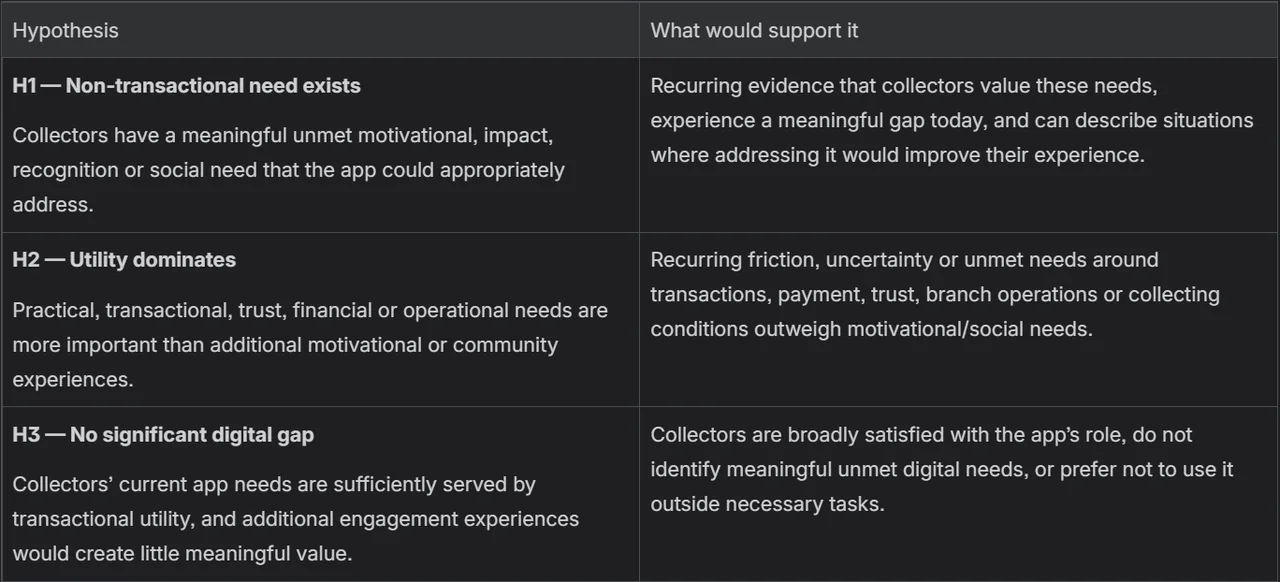 Three hypotheses to test.
The decision framework
Set the criteria for building—or stopping
Synthesis determines whether there is a problem worth taking into concepts. A concept must test well and be feasible before moving into a prototype or build. Operational problems can go to operations; a weak product case can stop.
A pilot needs a specific collector need, an expected change, and a way to measure it. More app opens alone would not establish that the feature helped.

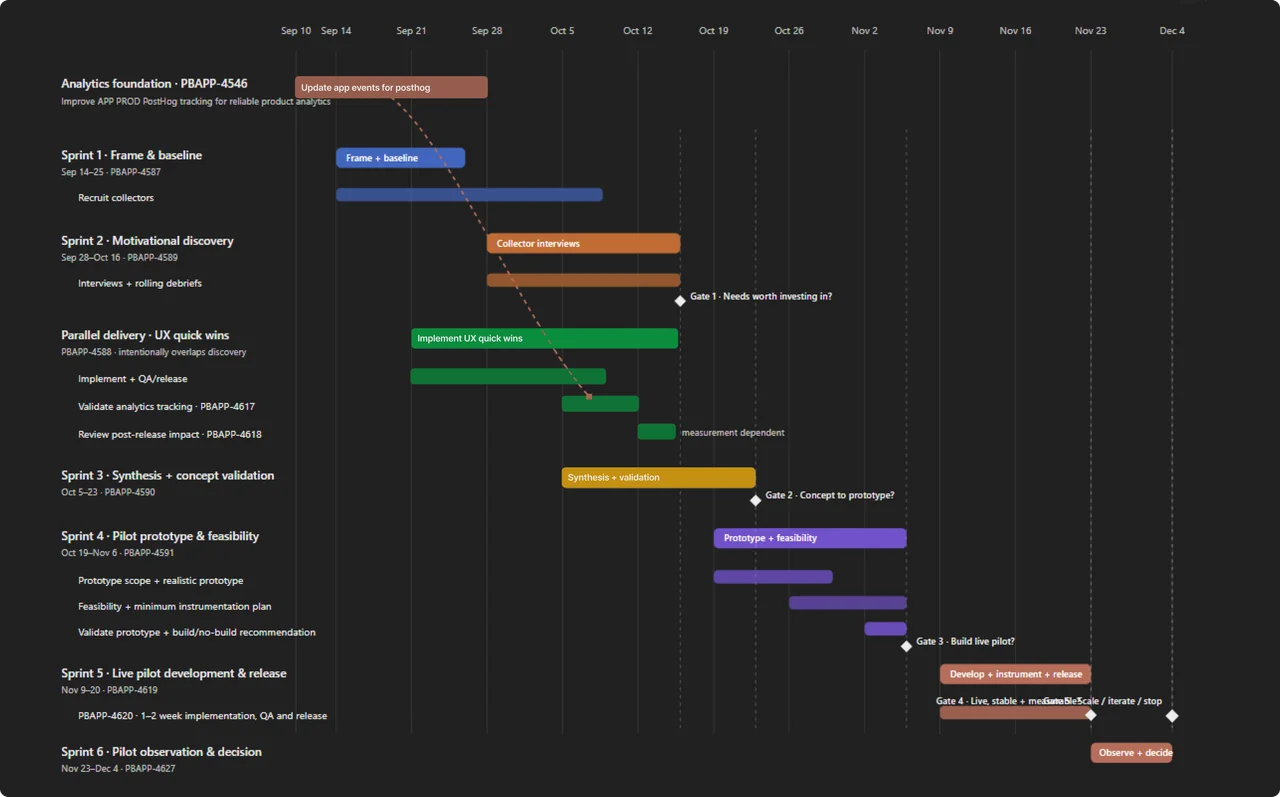 The project timeline leaves room to build, iterate, or stop.
Outcome so far
The research handoff is complete
Three hypotheses, recruiting criteria, and the interview guide are defined, with the guide handed to operations. The planned sample is 12–24 interviews. The completed milestone is the research handoff; synthesis and a product decision are still ahead.
