Making impact data useful for reporting
Turning client reporting needs into audit summaries, filters, and reusable exports.
Plastic Bank’s Impact Hub gave enterprise clients access to environmental and social impact data. I led interviews with Reckitt, Davines, Nutrabolt, and CooperVision, then translated their reporting needs into changes to the audit trail.
At a glance
- 4 clients
- Research shaped the redesign
- Shipped
- Audit summaries and global filters
- Export-ready
- Selected filters retained
Insight
Clients returned with a reporting task
Some clients went weeks or months between visits, then returned for an ESG report, campaign, or internal presentation. Daily engagement was a poor measure of whether the hub served them. They needed to find the right data, understand its source, and take it into their work.

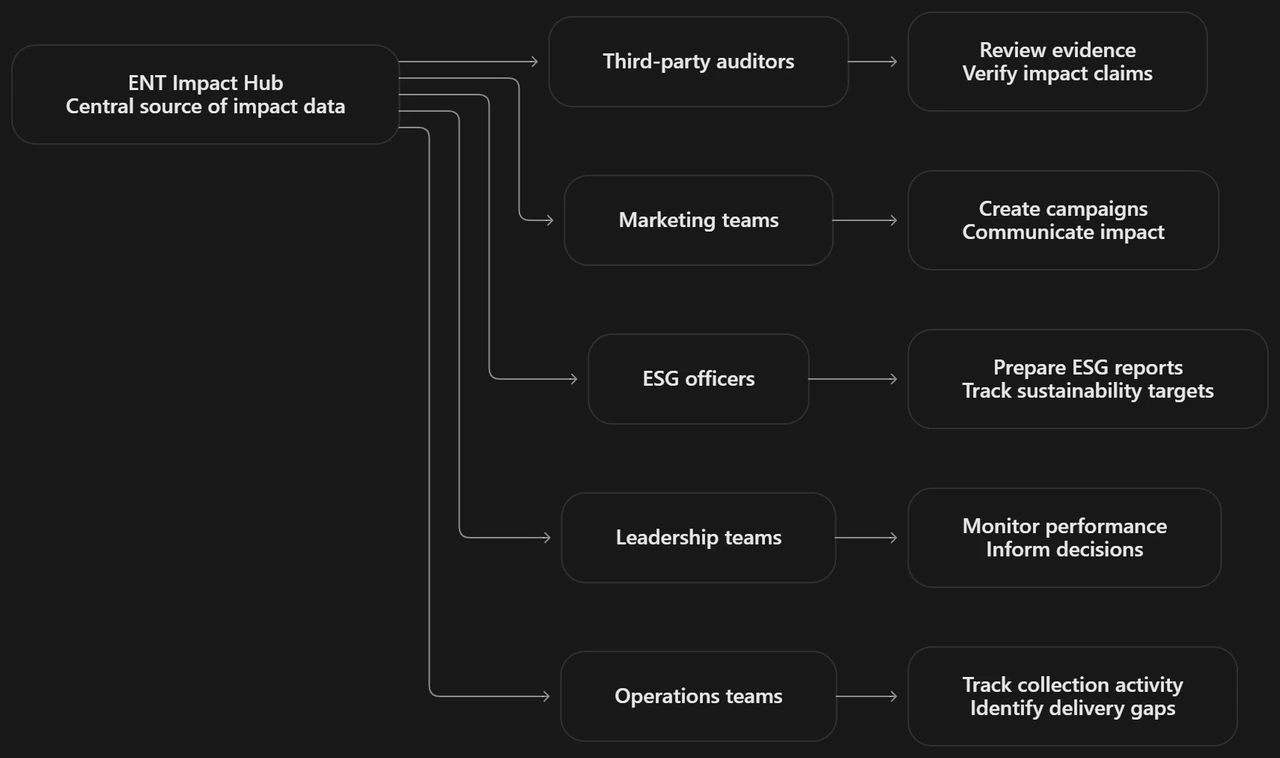
 The hub served sustainability, marketing, ESG, leadership, and operations. It’s a lot.
Research
The reporting task had three parts
Clients described unclear units, missing date and location filters, and extra work preparing data for reports. They also wanted to trace calculations and distinguish environmental, social, and economic impact before making external claims.
I grouped the feedback into three tasks: understand the totals, inspect the supporting records, and reuse a selected view.

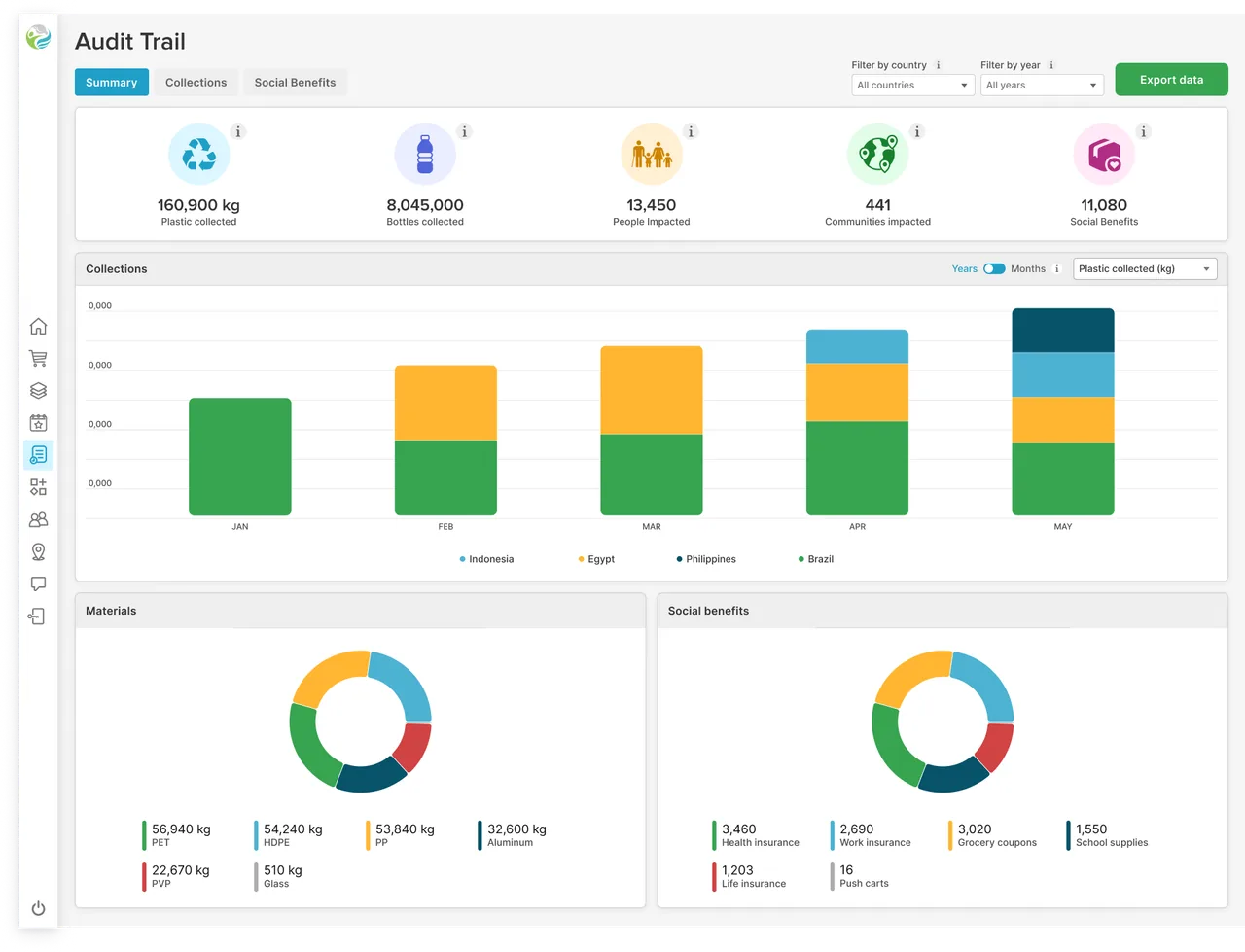 Summary metrics and progress charts gave clients an overview before opening collection records.
Design response
Keep context from summary to export
I added global date and location filters, clarified terminology and units, and used summary metrics and charts to show progress before clients opened individual collection records.
Exports retained the selected filters and segments. A client investigating one market or reporting period could carry that same selection into a report.

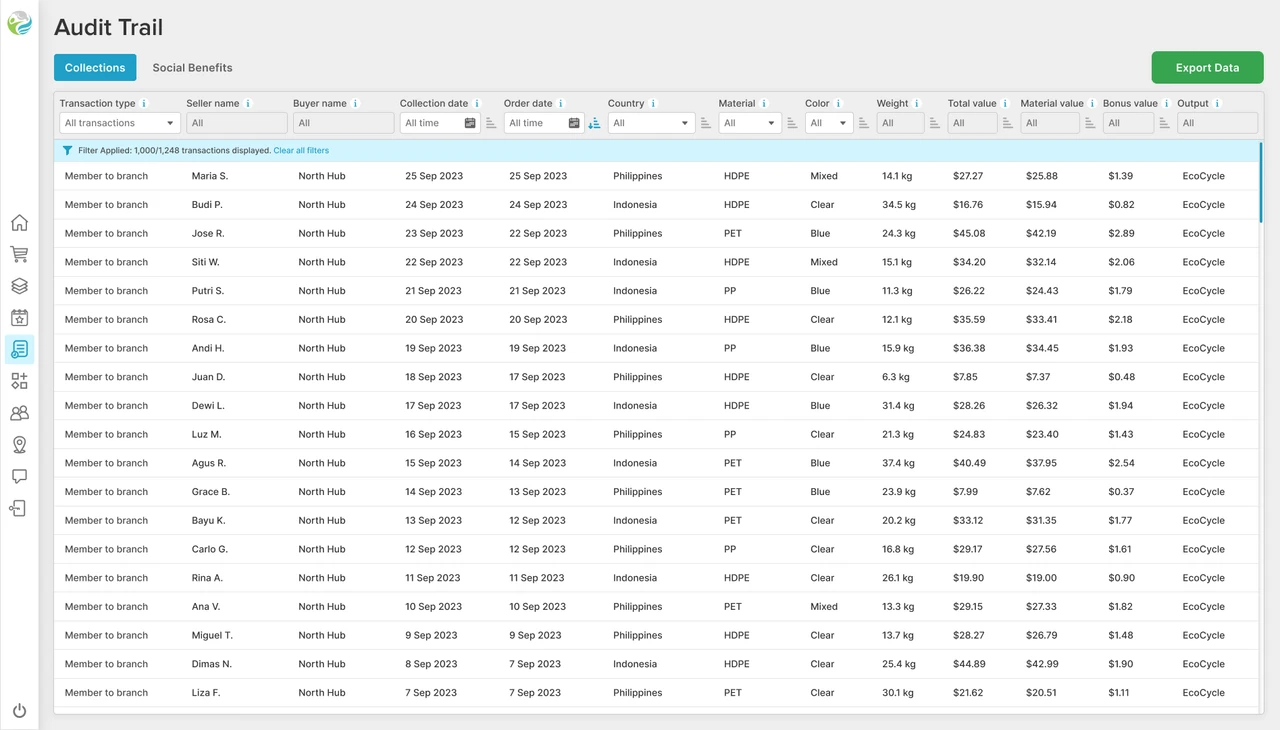 Collection records could be filtered by country and period, then exported for reporting.
Outcome
A reporting workflow shipped across releases
The research informed multiple audit-trail releases covering summaries, filters, terminology, and exports. Clients could move from an overview to supporting records and export the same selected view for their reports and presentations.
